Follow Me on Pinterest
Showing posts with label Sierra Nevada. Show all posts

Monday, July 27, 2015

National Parks in Spain

by Robert Bovington
 
Spain has a greater range of landscapes than any other country in Europe. It also has an impressive record for protecting its environment - it was one of the first countries in Europe to establish national parks when, in 1918, the Montaña de Covadonga National Park was established.
 
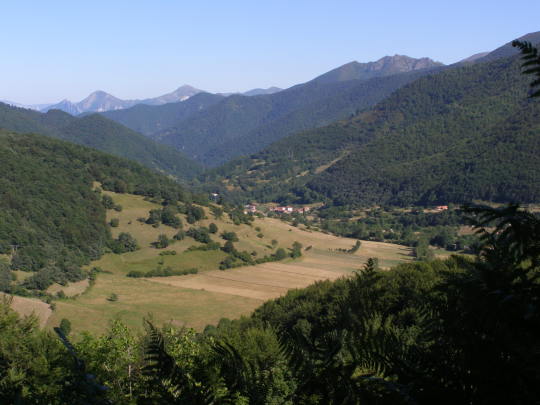
Today, this beautiful area is known as the Picos de Europa, situated in the Cantabrian Mountains in northern Spain. Asturias, Cantabria and Castilla y León share it. Back in 1918, only the western part of today's park was included. It had an area of 169.25 km². In 1995, the complete national park was established, with a total area of 646.60 km². It is a spectacular range of jagged limestone mountains that are home to an incredibly diverse range of flora and fauna. It is one of the reasons why the Picos de Europa has achieved UNESCO Biosphere status.
 

image
Picos de Europa

Currently, there are 15 national parks in Spain.
 
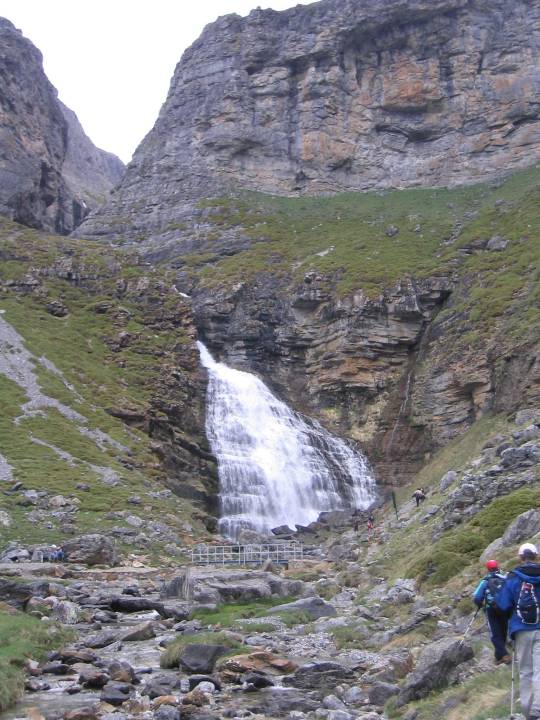
Another national park, also created in 1918, is the Ordesa y Monte Perdido National Park. It is another mountainous area and is situated in the Pyrenees of Huesca province in Aragón. This spectacular mountain park is home to Pyrenean chamois, wild boar and great birds like eagles and vultures. The park is included in the UNESCO Biosphere Reserve of Ordesa-Viñamala.
 

image
Ordesa y Monte Perdido National Park

 
You probably won't remember the name of the other Pyrenean national park! It is located in the province of Lérida in Catalonia. It is the Aigüestortes i Estany de Sant Maurici National Park, a wild mountainous region with peaks rising to over 3000 metres. It has nearly 200 lakes and lots of wildlife - Pyrenean chamois, marmot, ermine, roe deer and golden eagle amongst others.
 

image
Aigüestortes i Estany de Sant Maurici National Park

 
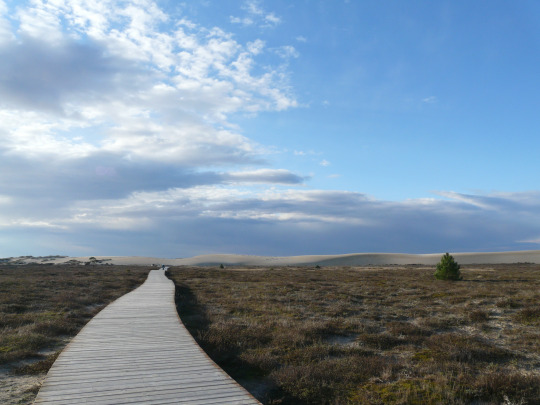
Galicia is privileged. It has three national parks within its borders. The Dunes of "Corrubedo" National Park is located in the province of A Coruña. It comprises sand dunes and unique wild flora and fauna - all situated in the Barbanza Peninsula.
 

image
The Dunes of "Corrubedo" National Park

 
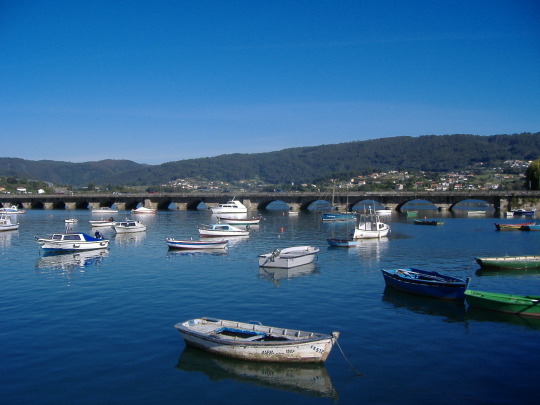
The "Fragas" of the River Eume National Park is a unique ecosystem in northwest Galicia situated in the environs of the River Eume - well it would be wouldn't it! The Atlantic islands off the coast of Pontevedra province in Galicia constitute an ecosystem of enormous ecological merit.
 

image
The "Fragas" of the River Eume National Park

 
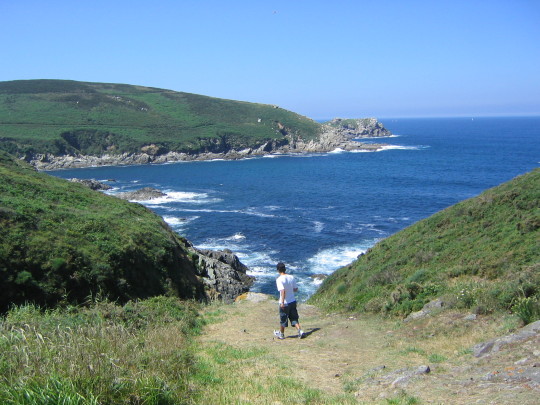
In 2002, the Illas Atlánticas de Galicia National Park was established to protect both the islands' habitat and the marine environment that surrounds them.
 

image
Illas Atlánticas de Galicia National Park

 
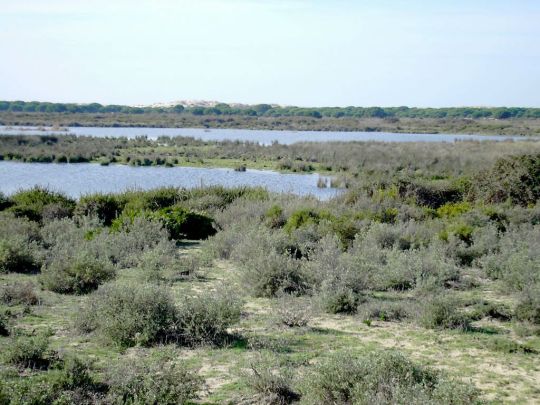
Two spectacular national parks are down in Andalucía - the Doñana National Park and the Sierra Nevada National Park. Both have been declared Biosphere Reserves. The former is located in the provinces of Huelva and Sevilla. It is also known as the Coto de Doñana and is the largest of Spain's national parks. Thousands of migratory birds shelter here as do wild boar, deer, badgers and the endangered Iberian Lynx.
 

image
Doñana National Park

 
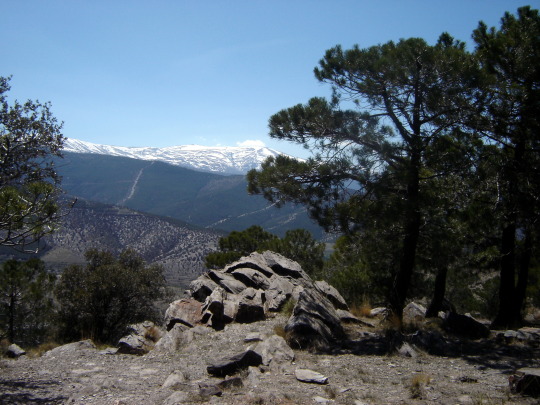
The Sierra Nevada is the highest mountain chain in the Iberian Peninsula. There are many peaks of 3,000 metres including Mulhacen the tallest (3,481m). The city of Granada sits amidst its northern foothills whilst the Alpujarras with its villages of whitewashed houses, lies on its southern slopes. Parts of this mighty range have been included in the Sierra Nevada National Park. There is a diverse range of fauna and flora here, which includes ibex, badger, beech marten, weasel, fox, golden eagle and the Apollo butterfly. There are sixty varieties of flower unique to this park.
 

image
Sierra Nevada © Robert Bovington

 
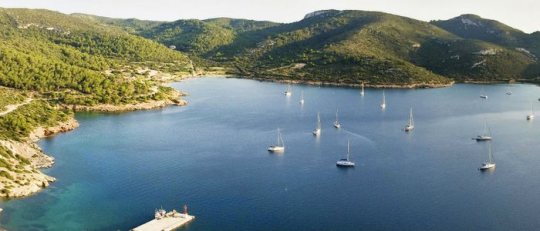
In the Balearics, a whole load of islands has national park status. The Archipiélago de Cabrera National Park comprises an archipelago - Cabrera and many smaller islands!
 

image
Archipiélago de Cabrera National Park

 
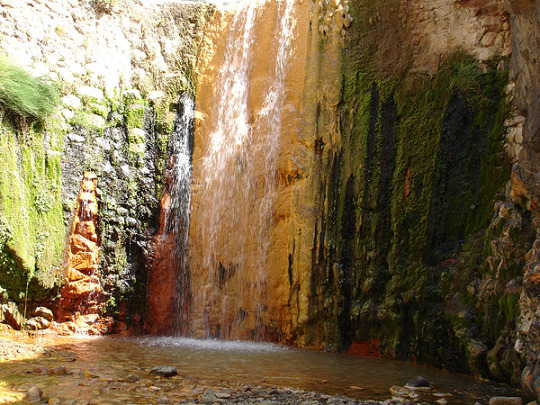
The Canary Islands has hundreds of protected areas including four national parks. On the island of La Palma is a gigantic crater, 27 kilometres in circumference and a 700-metre depth! It is the Caldera de Taburiente, so it is not surprising that the park is called the Caldera de Taburiente National Park! 
 

image
Caldera de Taburiente National Park

 
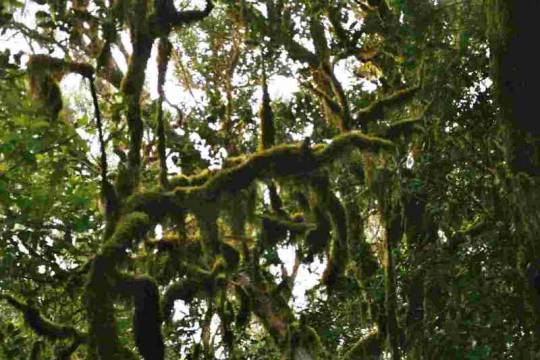
La Gomera is an unspoiled island and the Garajonay National Park there is a delightful place to walk. It is named after Alto de Garajonay, Gomera's highest peak but what makes the park so spectacular is its subtropical forest made up of laurel-leaved evergreen hardwood trees, reaching up to 40 metres in height. Watch out for lizards and frogs! 
 

image
Garajonay National Park

 
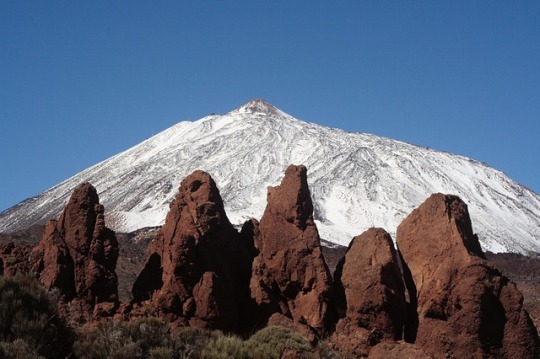
Pico del Teide is the highest mountain in Spain. It is actually a volcano and is on the island of Tenerife. In actual fact, the whole island is a volcano so no wonder Tenerife is warm! Seriously though, Teide is currently dormant, having last erupted in 1909. There are a number of small active fumaroles at the summit. They emit hot sulphur dioxide so it gets a bit smelly up there. The volcano and the surrounding area are protected in a national park, the Teide National Park. UNESCO has designated it as a World Heritage Site.
 

image
Teide National Park

 
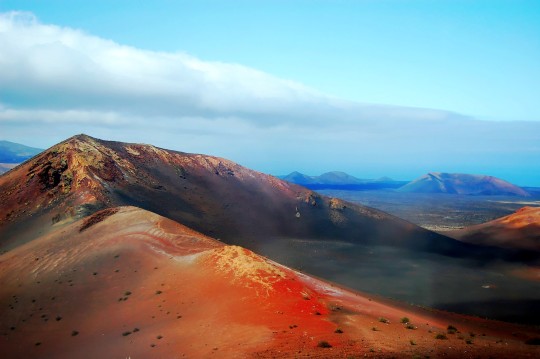
Another volcanic island is Lanzarote - there are over 300 volcanoes there and any trip to the island should include a visit to the Timanfaya National Park. It is a bizarre landscape of lava flows. UNESCO granted the park Biosphere status in 1993.
 

image
Timanfaya National Park

 
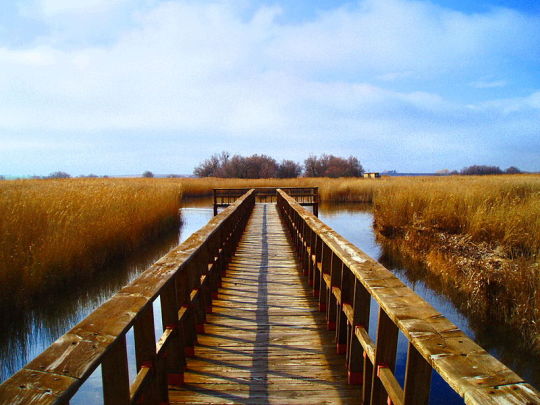
The other two national parks are in Castile-La Mancha. The Tablas de Daimiel National Park is Spain's smallest national park being less than 20 km². It is a nature reserve and home to many bird species. It is situated on the plain of La Mancha, only 30 kilometres from the city of Ciudad Real.
 

image
Tablas de Daimiel National Park

 
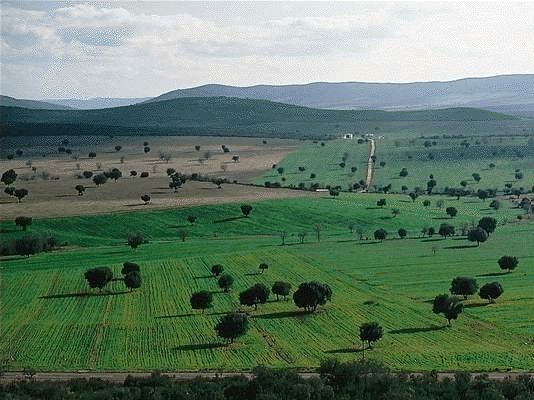
The Cabañeros National Park also contains many bird species - some 200 different types including black vulture, black-winged kite, golden eagle, imperial eagle, eagle owl and stork. There are also wild boar, deer and the Iberian lynx. The park is situated between the provinces of Ciudad Real and Toledo.
 

image
Cabañeros National Park

Robert Bovington

www.tablondeanuncios.com

more blogs by Robert Bovington...
"Photographs of Spain"
"postcards from Spain"
"you couldn't make it up!"
"a grumpy old man in Spain"
"bits and bobs"
"Spanish Expressions"
"Spanish Art"
"Books About Spain"

Thursday, July 16, 2015

Granada

by Robert Bovington

Granada is a city in the autonomous region of Andalucía, situated at the foot of the Sierra Nevada. It is one of the great cities of Spain if not the World.

Alhambra Granada © Robert Bovington

When visiting Granada it is tempting to spend all one's time admiring the Alhambra. From afar one can admire the beauty of its red walled parapets contrasting with the snow capped Sierra Nevada whilst once inside one can absorb oneself in the sheer splendour of its fantastic palaces and its tranquil gardens. However, Granada has much more to offer the visitor. It is a city where both Moorish and Christian history is visible in art and architecture.


Moorish Granada is exemplified by the UNESCO World Heritage Sites of the Alhambra, the Generalife and the Albaicín district whilst the Capilla Real and the Cathedral represent Christian Granada.

Alhambra and Generalife

The Alhambra is a museum of Islamic memories. It is essentially a number of palaces with extensive gardens surrounded by a fortress. There is much to see there including the Nazarite Royal Palaces that are interconnected via the Courtyards of the Myrtles and the Lions. Arabic-Granada art can be appreciated in many locations in the Alhambra as well as in the museums situated in the Renaissance Palace of Charles V that is also located within this spectacular complex.

Alhambra - Courtyard of the Myrtles

There are numerous water features in the garden of the Generalife. However, this is not a common or garden estate - it is a summer retreat fit for kings - well sultans anyway! It was the summer residence of the sultans of Granada and consists of a palace surrounded by magnificent terraced gardens amidst avenues of cypress trees. Running water plays an important role in the Generalife with fountains and water jets.

Generalife © Robert Bovington
Albaicín

The Albaicín district is an area of winding alleyways and narrow stairways clinging to the side of a hill. It is the ancient Arab quarter but nowadays it is a mix of Moorish and Christian monuments. The churches of San Salvador, San Bartolomé and San José have all been built on top of mosques. A number of small villas are to be found in the Albaicín called 'carmens' - modern versions of a type of Moorish residence comprising a house and its adjoining garden. Other Arab features in this quarter include the underground reservoirs, the Arab baths and the Moroccan shops selling traditional handicrafts. From various locations in the Albaicín there are fantastic views of the Alhambra and the Sierra Nevada.

The Sacromonte district contains thousands of caves that for more than 600 years have been inhabited by gitanos. It is the area to encounter impromptu flamenco at gypsy fiestas called zambras.

The Capilla Real or Royal Chapel is an impressive Gothic building that was built by Ferdinand and Isabella in 1504 as a mausoleum for themselves - they wanted to live forever in the last of the Arab kingdoms in Spain.

The Cathedral was built in 1523 on the site of the city's main mosque. Like the Capilla Real, its main objective was to unequivocally establish Christian rule in the last city in Spain to be occupied by the Moors.
 
Granada Cathedral © Robert Bovington

There are many other places of note in the city including the Palace of the Córdobas, the church of San Pedro, the Renaissance convent of Santa Catalina de Zafra, the Royal Chancery, the Almanxarra Palace and the House-Museum of Manuel de Falla.

Manuel de Falla and Federico García Lorca


© Robert Bovington
Manuel de Falla, the famous Spanish composer was born in Cádiz but lived for many years in Granada. He was a friend of another Andalucian - Federico García Lorca, the greatest Spanish poet and playwright of the 20th century, who was born just outside of Granada. Lorca died in 1936, during the Spanish Civil War. Fascist soldiers shot him!
.
Over seventy years later, his home city of Granada has started to honour him. Granada's airport is called 'Aeropuerto Federico García Lorca'; postcards of the poet and his drawings are displayed alongside those of the Alhambra in the city's shops and kiosks and the tourist industry has jumped on the bandwagon by offering 'Lorca route' itineraries. Visits can be made to a number of sites in the area related to Lorca's life including Víznar near Granada, the site of his murder. Situated only a few miles from Granada is the House Museum of La Huerta de San Vicente, where the young Federico lived with his family.
.
There are very many more places to visit in this wonderful city and it would need a whole book to describe them all. In fact, the Alhambra itself has been the subject of a book - Washington Irving's famous 'Tales of the Alhambra' is an excellent account of the jewel in the crown that is Granada.


This article is an extract from “Spanish Impressions” by Robert Bovington
ISBN 978-1-4452-2543-2 available from:
http://www.lulu.com/spotlight/bobdotbovingtonatgmaildotcom

more blogs by Robert Bovington... 
 

"Photographs of Spain"
"postcards from Spain"
"you couldn't make it up!"
"a grumpy old man in Spain"
"bits and bobs"
"Spanish Expressions"
"Spanish Art"
"Books About Spain"


Wednesday, July 1, 2015

Granada

by Robert Bovington

Granada is a city in the autonomous region of Andalucía, situated at the foot of the Sierra Nevada. It is one of the great cities of Spain if not the World.

Alhambra Granada © Robert Bovington

When visiting Granada it is tempting to spend all one's time admiring the Alhambra. From afar one can admire the beauty of its red walled parapets contrasting with the snow capped Sierra Nevada whilst once inside one can absorb oneself in the sheer splendour of its fantastic palaces and its tranquil gardens. However, Granada has much more to offer the visitor. It is a city where both Moorish and Christian history is visible in art and architecture.


Moorish Granada is exemplified by the UNESCO World Heritage Sites of the Alhambra, the Generalife and the Albaicín district whilst the Capilla Real and the Cathedral represent Christian Granada.

Alhambra and Generalife

The Alhambra is a museum of Islamic memories. It is essentially a number of palaces with extensive gardens surrounded by a fortress. There is much to see there including the Nazarite Royal Palaces that are interconnected via the Courtyards of the Myrtles and the Lions. Arabic-Granada art can be appreciated in many locations in the Alhambra as well as in the museums situated in the Renaissance Palace of Charles V that is also located within this spectacular complex.

Alhambra - Courtyard of the Myrtles

There are numerous water features in the garden of the Generalife. However, this is not a common or garden estate - it is a summer retreat fit for kings - well sultans anyway! It was the summer residence of the sultans of Granada and consists of a palace surrounded by magnificent terraced gardens amidst avenues of cypress trees. Running water plays an important role in the Generalife with fountains and water jets.

Generalife © Robert Bovington
Albaicín

The Albaicín district is an area of winding alleyways and narrow stairways clinging to the side of a hill. It is the ancient Arab quarter but nowadays it is a mix of Moorish and Christian monuments. The churches of San Salvador, San Bartolomé and San José have all been built on top of mosques. A number of small villas are to be found in the Albaicín called 'carmens' - modern versions of a type of Moorish residence comprising a house and its adjoining garden. Other Arab features in this quarter include the underground reservoirs, the Arab baths and the Moroccan shops selling traditional handicrafts. From various locations in the Albaicín there are fantastic views of the Alhambra and the Sierra Nevada.

The Sacromonte district contains thousands of caves that for more than 600 years have been inhabited by gitanos. It is the area to encounter impromptu flamenco at gypsy fiestas called zambras.

The Capilla Real or Royal Chapel is an impressive Gothic building that was built by Ferdinand and Isabella in 1504 as a mausoleum for themselves - they wanted to live forever in the last of the Arab kingdoms in Spain.

The Cathedral was built in 1523 on the site of the city's main mosque. Like the Capilla Real, its main objective was to unequivocally establish Christian rule in the last city in Spain to be occupied by the Moors.
 
Granada Cathedral © Robert Bovington
There are many other places of note in the city including the Palace of the Córdobas, the church of San Pedro, the Renaissance convent of Santa Catalina de Zafra, the Royal Chancery, the Almanxarra Palace and the House-Museum of Manuel de Falla.

Manuel de Falla and Federico García Lorca


© Robert Bovington
Manuel de Falla, the famous Spanish composer was born in Cádiz but lived for many years in Granada. He was a friend of another Andalucian - Federico García Lorca, the greatest Spanish poet and playwright of the 20th century, who was born just outside of Granada. Lorca died in 1936, during the Spanish Civil War. Fascist soldiers shot him!
.
Over seventy years later, his home city of Granada has started to honour him. Granada's airport is called 'Aeropuerto Federico García Lorca'; postcards of the poet and his drawings are displayed alongside those of the Alhambra in the city's shops and kiosks and the tourist industry has jumped on the bandwagon by offering 'Lorca route' itineraries. Visits can be made to a number of sites in the area related to Lorca's life including Víznar near Granada, the site of his murder. Situated only a few miles from Granada is the House Museum of La Huerta de San Vicente, where the young Federico lived with his family.
.
There are very many more places to visit in this wonderful city and it would need a whole book to describe them all. In fact, the Alhambra itself has been the subject of a book - Washington Irving's famous 'Tales of the Alhambra' is an excellent account of the jewel in the crown that is Granada.


This article is an extract from “Spanish Impressions” by Robert Bovington
ISBN 978-1-4452-2543-2 available from:
http://www.lulu.com/spotlight/bobdotbovingtonatgmaildotcom

more blogs by Robert Bovington... 
 

"Photographs of Spain"
"postcards from Spain"
"you couldn't make it up!"
"a grumpy old man in Spain"
"bits and bobs"
"Spanish Expressions"
"Spanish Art"
"Books About Spain"

Sunday, July 22, 2012

Protected Landscapes in Spain

by Robert Bovington

Spain has a rich scenic diversity. Vast areas of the country remain wild, rugged and sparsely populated and large parts of the country are protected. Within Europe, Spain leads the way in the conservation of its heritage. There are many categories of protection including national parks, natural parks and biosphere reserves. There are two biosphere reserves close to my heart and close to where I live - the Cabo de Gata and the Sierra Nevada. The Cabo de Gata was designated a UNESCO biosphere reserve in 1997, the Sierra Nevada in 1986. Both meet UNESCO's criteria in that they are ecologically diverse and demonstrate a balanced relationship between humans and the environment.


The World Network of Biosphere Reserves is the collection of all 531 biosphere reserves in 105 countries (2009). Spain has thirty-three which is a proportionately higher number compared with other European countries.

These include the spectacular Ordesa National Park in the Pyrenees, the lowland wilderness of the Doñana National Park in western Andalucía and the snow-capped heights of the Picos de Europa in Cantabria.

The Sierra Nevada also has National Park status but, then, it has quite a lot going for it - it contains the Iberian Peninsula's highest mountains, which are the spectacular backdrop to the magnificent city of Granada.


Sierra Nevada - view from Puerto de Ragua
photo: Robert Bovington

Spain was one of the first countries in Europe to establish national parks when, in 1918, the Montaña de Covadonga National Park was established. Today, this beautiful area is known as the Picos de Europa, situated in the Cantabrian Mountains in northern Spain. Incidentally, the Picos de Europa has also achieved UNESCO Biosphere status. Currently, there are 15 national parks in Spain.

There are also many hundreds of natural areas that have been afforded protection. National parks are afforded the highest level of protection followed by natural parks. There are also natural monuments, special protection areas, nature reserves, protected landscapes, biotopes, nature enclaves, wildlife reserves, marine reserves, rural parks, natural landscapes of national interest and sites of scientific interest and, of course, biosphere reserves.

Natural parks are pretty special but there are too many to list here. Every autonomous community has a number of protected areas with Catalonia, Andalucía and the Canaries being the most prolific with several hundreds between them.

In Andalucía there are around 150 protected areas including 23 natural parks. Three of my favourites are the Cabo de Gata-Níjar Natural Park, the Sierra de Grazalema Natural Park and the Sierra de las Nieves. All three are biosphere reserves.

Sierra de Grazalema
photo: Robert Bovington

Sierra de las Nieves
photo: Robert Bovington

Extract from my Pinterest "Spain - natural spaces" pinboard

Monday, February 6, 2012

The beauty of the Alpujarras


almond blossom nr Albondon

...
Las Alpujarras is the area of picturesque white villages that cling to the southern slopes of the Sierra Nevada. It is a nature lover's delight. Torrents cascading down from the frozen summits of the high Sierra have cut deep ravines into the rock leaving the lower slopes a brilliant green. Olive and almond trees abound and as one travels higher into the Alpujarras, oak, chestnut and pine forests flourish. Every season in the Alpujarras is special - even winter with its orange trees heavy with fruit.
......

Whole mountainsides are given over to growing things - many hillsides are terraced - a legacy of the Moors who also built irrigation channels - acequias - to bring water from the high Sierra to irrigate the crops. The region contains an abundance of fruit trees, especially grape vines, oranges, lemons, persimmons, figs and almonds.

sheep rearing nr Nechite

The whole region is special and one of great natural beauty. The valleys of the western Alpujarras are among the most fertile in Spain, though the steep nature of the terrain means that they can only be cultivated in small fields, so that many modern agricultural techniques are impractical. However, that adds to the charm of the area - at least for us idle buggers who don't have to work the fields. On a recent walk along the GR7 footpath, near the delightful little town of Válor, I saw a farmer ploughing the side of a hill using a horse and plough!


more blogs by Robert Bovington...
"Photographs of Spain"
"postcards from Spain"
"you couldn't make it up!"
"a grumpy old man in Spain"
"bits and bobs"
"Spanish Expressions"
"Spanish Art"
"Books About Spain"

Thursday, December 8, 2011

Andalucía

by Robert Bovington

map of Andalucía © Robert Bovington
Andalucía is the southernmost region of mainland Spain. It is the land of bullfighting, flamenco and gypsies. It is the land of high sierras, charming white villages and magnificent cities. It is the embodiment of Spain and yet its people think of themselves as Andalucian first and Spanish second - Andalucía became an autonomous community with its own parliament in Sevilla in 1982. The regional government - the Junta de Andalucía - administers things like taxes, health and most governmental day-to-day affairs. However, the Andalucian people have voted for independence from Spain. They already celebrate Andalucian day - on February 28 each year.

Andalucía is diverse - a country of extremes and its people live life to the full. Most British holidaymakers head for the beaches of the Costa del Sol. The more adventurous and perhaps slightly more cultured may venture further afield - perhaps to the cities of Málaga or Granada. Some might even visit the fantastic Alhambra! Most do not see the real Andalucía and miss an incredible array of cultural and ecological splendour.

There are eight provinces in Andalucía: Almería, Cádiz, Córdoba, Granada, Huelva, Jaén, Málaga and Sevilla and, within this land, the diversity of things to see is astounding. There are the green foothills of the snow-capped Sierra Nevada, the alluvial plains of the Guadalquivir River and the desert lands of Almería. There are fields of golden barley and yellow sunflowers, rolling hills of olive, almond, citrus and terraces of grape - all under an intense blue sky. Scattered across this spectacular fabric are the charming white villages that often cling precariously to the many mountain slopes in the region and the great cities like Granada, Sevilla and Córdoba.

Andalucía is the second largest region of Spain and the most densely populated yet it is seventy percent of the size of England but with only seven million people and most of these are congregated around the Costa del Sol - poor sods. The result is that there are many wide open spaces and a lot of these are conservation areas. In 2005, Spain had 1.6 million hectares of protected landscape representing 9.1% of the total area - the highest in Europe. Andalucía, however, had a whopping 18.92 per cent! One hundred and sixty three actual sites were under some sort of protection including two National Parks (Sierra Nevada and Doñana), twenty-four Natural Parks and eight Biosphere Reserves.

The areas that I have visited are delightful places to visit, walk, drive or live. The Sierra Nevada is a favourite of mine and it is the location of the highest mountain in mainland Spain, Mulhacén. It also has the charming Alpujarras spread across its southern slopes. The Doñana National Park is the largest of Spain's national parks and has three distinct ecosystems: the salt marshes, the brushwood and the salt dunes. An amazing array of fauna and flora is to be found there. The same can be said of another favourite of mine - the Parque Natural de Cabo de Gata-Níjar to give it its full title. Located a short distance from Almería, some of its species of flora are unique to the area - like the pink snapdragon antirrhinum charidemi. This park really mirrors the diversity of the region - it is volcanic in origin and comprises coastal dunes, steep cliffs, spectacular beaches, salt marshes, saltpans, arid steppe inland, dry riverbeds and a substantial marine zone. It is probably this ecological diversity that has led to the park being designated a UNESCO Biosphere reserve.

Near Ronda there are other beautiful protected areas including the Sierra de las Nieves and the Sierra de Grazalema. I discovered the former when I drove from Fuengirola to Ronda via Tolox and Coín, a longer but much more splendid drive than the more direct route via Marbella. When I visited the Sierra de Grazalema I decided that I liked it even more than the Alpujarras. It too has charming pueblos blancos - like Zahara de la Sierra, which is reckoned to be one of the most attractive of the 'White Villages of Andalucía'. Grazalema too is delightful. However there are charming white villages throughout the region - many clinging precariously to hillsides.

It is not just countryside that has been afforded protection - buildings too are on the list of protected sites. For example, the Alhambra Palace in Granada is a World Heritage site - but then the great cities of Andalucía are magnificent - Sevilla with its Cathedral and the Giralda - Córdoba and the Mezquita - Granada.


The reason for this splendour was the great influence of Muslim rule on Andalucian culture. The Moors ruled over this region for eight hundred years until the Catholic Monarchs re-conquered Granada in 1492. These Arabs and Berbers of Muslim faith had a profound effect on architecture; agriculture and the arts in this region whose name, incidentally, was derived from the Arabic name "Al Andalus".

There are other fine towns in the region: Cádiz is purportedly Europe's oldest city, Ronda is the largest of the 'White Towns' and the birthplace of bullfighting, Baeza and Ubeda have magnificent Renaissance buildings and Almería has the imposing Alcazaba - also built by the enterprising Moors.

Yes - these Arab peoples built some of the most marvellous buildings in Spain and introduced irrigation systems that are still in use today in places like the Alpujarras. It beats planting bombs and running corner shops! But I digress.

Andalucía has so many wide open spaces, delightful countryside and magnificent cities that it amazes me that most holidaymakers head for the Costa del Sol. However I hope they continue to do so - the beauty of this delightful region is enhanced by the fact that most of it is not despoiled by mass tourism. I don't want English bars in the Alpujarras thank you!


Robert Bovington