Follow Me on Pinterest
Showing posts with label Málaga province. Show all posts

Thursday, April 28, 2016

“A delightful oasis of peace in the centre of Benalmadena”


Occasionally I yearn for some peace and solitude away from the noise and bustle of the Costa del Sol. One of the places I head for is Parque de la Paloma in Benalmadena.
.
It is delightful.


There is a lake In the middle of the park. It is inhabited by swans, gulls, ducks, mallards and turtles. And, of course, fish. 


The path around the lake makes a pleasant walk especially for the elderly - or should I say older people than me! There are many paths that criss-cross this attractive park, some with a bit of a gradient but not too steep.


Little animals roam freely. These include hens, chickens, roosters, pigeons, sparrows and rabbits. There are also ibex and ostriches but these are penned in.


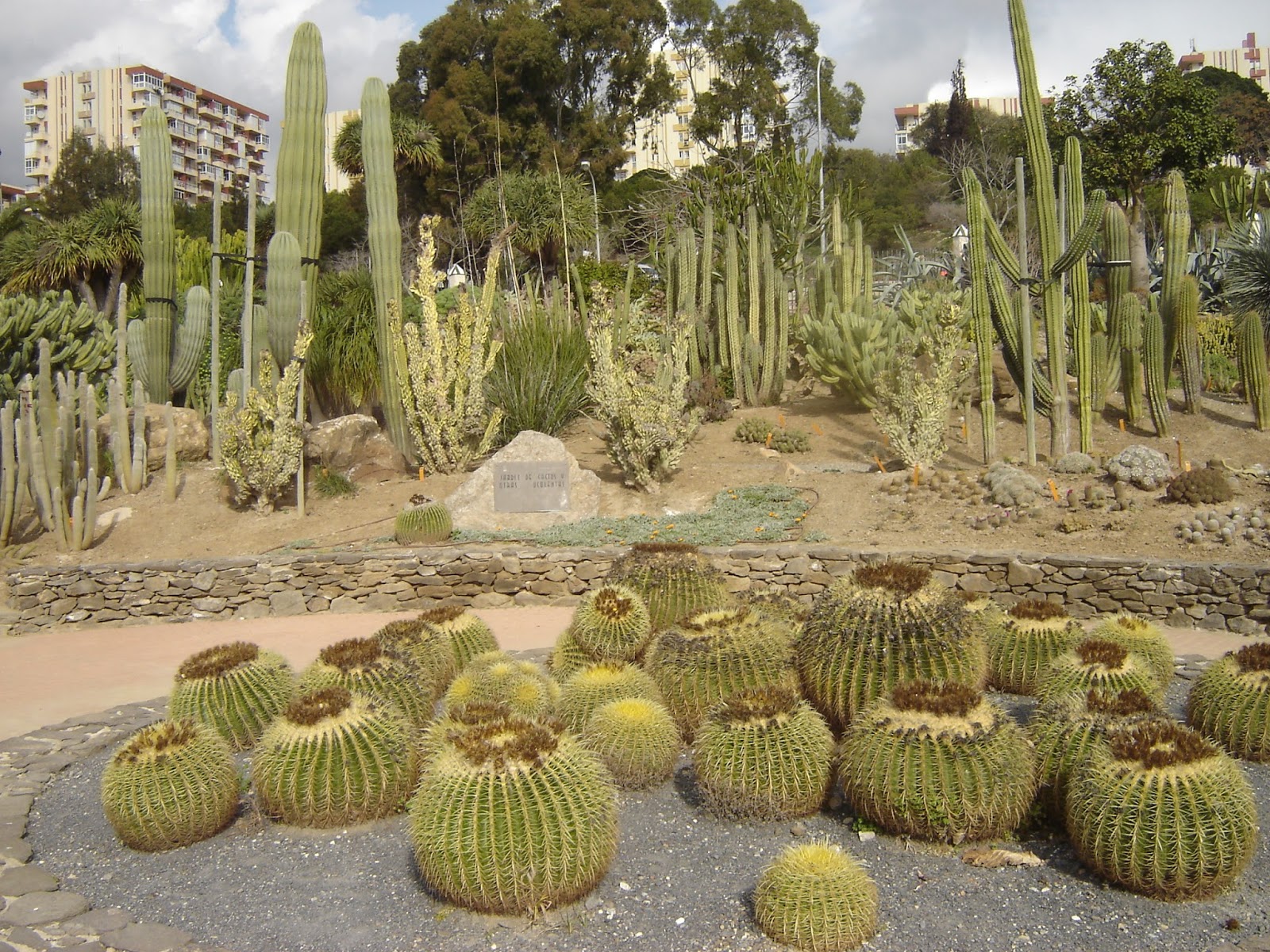
There are a variety of trees, deciduous and evergreen which include eucalyptus, weeping willow, palm and cypress. There is also a cactus garden with other species as well as cactii.


Los niños are catered for with a playground and other areas where they can be let loose safely. Some areas of the park are closed to dogs.


On my last visit in April 2016, I visited the little cafe near the south-east corner of the park for a beer. And very pleasant it was too.
The park is located in the centre of the town only 200 metres from the windmill roundabout on the seafront. I parked nearby without difficulty.

Robert Bovington
April 2016


www.tablondeanuncios.com

more blogs by Robert Bovington...
"Photographs of Spain"
"postcards from Spain"
"you couldn't make it up!"
"a grumpy old man in Spain"
"bits and bobs"
"Spanish Expressions"
"Spanish Art"
"Books About Spain"

Sunday, January 3, 2016

Frigiliana

by Robert Bovington
 

I have visited Frigiliana on a number of occasions. It is an attractive pueblo blanco, a short drive from the equally pretty coastal town of Nerja. Administratively it is part of Torrox in the Axarquia region of the province of Málaga.

Frigiliana © Robert Bovington

 The village lies on the southern slopes of the Sierra de Almijara and is 300 meters above sea level.

Places to see:
The village has a number of attractions:-
 
The Church of San Antonio de Padua, located in Calle Real, was built in the 17th century on the site of an old mosque. Its bell tower is the former minaret of the mosque.

Iglesia de San Antonio de Padua, Frigiliana © Robert Bovington
   
Another religious building is La Ermita del Ecce Homo. This small chapel was built in the 18th century. Nowadays, many citizens prefer to call it the "Ermita de Santo Cristo de la Caña". 
 
The Palacio de los Condes de Frigiliana used to be a 16th century renaissance-style palace which belonged to the Count and Countess of Frigiliana, the Manrique de Lara family. Nowadays it tends to be known as El Ingenio and is believed to be the last remaining sugar cane honey factory in Europe. Just around the corner, Bar el Ingenio is a pleasant little place to drink. 
 
Nearby are the Reales Pósitos. Back in the 18th century, it was built to store grain. Nowadays, it is used for both dwellings and shops. And bars!
  
Calle Real, Frigiliana © Robert Bovington
  
The 17th century Casa del Apero originally served as a granary and a warehouse. In 1990, the building was restored and it is now the Municipal House of Culture. Inside there is there is a library, an exhibition room and the tourist information office. 
 
Tourist guides mention two other places of interest in the town - La Fuente Vieja and the 9th century Castillo de Lizar. The former is attractive enough but it is after all only a fountain! The latter is only worth visiting for the spectacular views because there is hardly anything left of the original castle!

La Fuente Vieja © Robert Bovington
 
So, there are a number of interesting places to see in the town but probably the best bit is just wandering around the old Moorish quarter!
 
   
Festivals:
Like all Spanish towns and villages, Frigiliana has its fair share of festivals. A couple, in particular, are pretty spectacular:
 
The Cruces de Mayo celebration occurs on May 3 every year. Every plaza of the town gets a big wooden cross. The crosses are adorned with Spanish shawls, plants and flowers. Many villagers offer visitors tapas and wine for free. In the afternoon, the town band and other musicians make music. 
 
Cruces de Mayo
  
During the last week of August, the ‘Festival Frigiliana Tres Culturas’ brings together the influences of the Moors, Jews and Christian cultures with a festival of food, music, art and street entertainment.
 
http://mynerja.com/view/news/the-three-cultures-festival-in-frigiliana/
  
Other festivals in Frigliana are listed below:
   Fiesta de San Sebastián in January;
   Carnaval in February;
   The Feria of San Antonio in June;
   Feria de San Juan in June (usually on the beach in Nerja);
   Fiesta de las Candelarias in September.
 
Of course there are also the national celebrations including Christmas, Holy Week.
 
In summer, there are other cultural events held in Frigiliana including the traditional dance festival; the annual band contest, and the contest between choirs dedicated to Our Lady of El Rocío.

Robert Bovington


more blogs by Robert Bovington...
"Photographs of Spain"
"postcards from Spain"
"you couldn't make it up!"
"a grumpy old man in Spain"
"bits and bobs"
"Spanish Expressions"
"Spanish Art"
"Books About Spain"

Tuesday, October 13, 2015

Casarabonela - a pueblo blanco in Málaga province

Casarabonela is on the easternmost edge of the area officially classified as the White Towns of Andalusia. It is situated in the Sierra de las Nieves and is yet another attractive pueblo blanco that has preserved its Arabic heritage with its narrow streets and whitewashed houses festooned with flowers. Like many of the villages some of the alleyways are rather steep.


An attractive church - the Iglesia de Santiago Apóstle is located in the main plaza. It has some interesting crypts and a museum of silver and religious artifacts.


There are a number of attractive fuentes, like the one below...


more blogs by Robert Bovington... 

"Photographs of Spain"
"postcards from Spain"
"you couldn't make it up!"
"a grumpy old man in Spain"
"bits and bobs"
"Spanish Expressions"
"Spanish Art"
"Books About Spain"

Wednesday, September 23, 2015

Mijas - a pueblo blanco in the Costa del Sol


Mijas, a pueblo blanco, is situated in the foothills of the coastal mountain range that overlooks the Costa de Sol. Mijas itself is a typical pretty mountain town but due to it's close proximity to Fuengirola it get's a tad crowded  with tourists, even in the winter months. The actual municipal area covers about 140 square kilometres, from the mountains down to the sea and comprises three urban areas, Mijas Pueblo, Las Lagunas and La Cala de Mijas. It is Mijas Pueblo that we and other tourists visit. It is here, the old town with its Town Hall, its historic buildings and its whitewashed houses that holidaymakers seeking a distinct change from the over developed coastal strip are to be found.

a typical street in Mijas


My wife likes Mijas because of the shops. Yes, some are a trifle touristy and sell the usual pottery, leather goods and pictures of white-washed houses but there are also more tasteful establishments including shops selling antiques and fine art. There are also the little bars and restaurants some with stunning views. 

I just like walking the steep narrow streets with the little houses with their white facades adorned by colourful pots of flowers. On one occasion I walked up to the little chapel, the Calvario Hermitage, on the hill high above Mijas. It was rather a strenuous climb and I wished at the time that I had picked a colder day to do it but once there I enjoyed the views and the well-earned rest. Unfortunately the chapel itself was locked.

Calvario Hermitage

A less strenuous chapel to visit, and one that isn't usually locked, is the Hermitage of the Virgen de la Peña, the patron saint of Mijas.  The chapel was built by Mercedarian monks in 1520 and inside is a carved wooden image of the virgin allegedly dating back to AD850. It is a delightful little building, although I find it a bit incongruous that, just like a number of ancient churches that I have visited in recent years, it has electronic candles rather than the real thing! Outside there is a lookout point overlooking the Mijas valley and the Costa del Sol.

Hermitage of the Virgen de la Peña

Other places to visit in Mijas are the Casa Museo and Carromato de Max museums; the Plaza de Toros bullring and museum of bullfighting. 

Mijas bullring

However, my favourite place in Mijas is La Muralla - a park with balconies from where one can view the coast below.

 
view from La Muralla

for more photos of Mijas, click on my photo below:-


www.tablondeanuncios.com


more blogs by Robert Bovington...
"Photographs of Spain"
"postcards from Spain"
"you couldn't make it up!"
"a grumpy old man in Spain"
"bits and bobs"
"Spanish Expressions"
"Spanish Art"
"Books About Spain"

Monday, July 13, 2015

Ronda


by Robert Bovington


Ronda is interesting. Apart from being one of the most attractive towns in southern Spain, it is famous for smuggling, banditry, hunting and bullfighting.


Ronda - Puente Nuevo © Robert Bovington

The town is located in one of the most dramatic locations in Europe -perched 750 metres above sea level, on an inland plateau, sliced in half by the 100-metre deep Tajo gorge. The Puente Nuevo spans the gorge and connects El Mercadillo, the new part of the town with La Ciudad, the old part.

The views from the bridge and the nearby Alameda Gardens are breathtaking. In fact, the whole town is a photographer's dream - or a nightmare if there is insufficient film or lack of space on the digital camera's memory card. 


Palacio de Marqués de Salvatierra   
© Robert Bovington


Throughout Ronda there are delightful buildings like the 'Palacio de Mondragón' and the Casa del Marqués de Salvatierra'.


Like many Andalucian towns, Ronda has quite a bit of history. It occupies the site of an ancient Iberian settlement and was known in Roman times as Acinipo. Between the 8th and 15th centuries it was occupied by the Moors and the Roman Catholic monarchs Ferdinand and Isabella reconquered it in 1485. Ronda has also been the stronghold of various other peoples - like bandits! Highwaymen roamed the nearby mountains in the 19th century, robbing wealthy tourists headed for Ronda on their 'Grand Tour of Europe'. Smugglers too, frequented the town and some believe that Ronda may have been the supposed location of the third act of Bizet's 'Carmen'. Whether that is true is open to question but one undisputable fact is that Ronda is the cradle of bullfighting. 

Puente Nuevo and Tajo Gorge 
© Robert Bovington

Enough of the history lesson - let's explore Ronda! There is so much to see it is difficult to know where to start. Perhaps it is best to begin at the Puente Nuevo. The bridge is hardly as new as its name implies - it was built over 200 years ago! It is the focal point of the town. It is a masterpiece of architecture and engineering but it took 42 years to build and special machines had to be invented to raise the huge solid stone blocks from the bottom of the gorge. Various vantage points on the bridge provide spectacular views of the gorge far below.

The northern side of the Tajo gorge is the new part of the town, the area known as El Mercadillo. It comprises a warren of streets with bars, restaurants and shops. The Plaza de Toros and the Alameda Gardens are also located there - only a few yards from the bridge. Ronda's bullring, in the Plaza de Toros, is the oldest in Spain. It is quite splendid. The neo-classical interior comprises two storeys with Tuscan columns. There is also a bull-fighting museum and, every September, the Goyesque bullfights take place in the bullring. The three-day feria y fiestas de Pedro Romero were inspired by the great friendship that existed between Francisco de Goya and Pedro Romero, the great bullfighter - if one can call someone who slaughtered over 6000 bulls great! Nonetheless, he is regarded as the father of modern bullfighting. A little further on, there are the Alameda Gardens which are not only delightful but which also provide further breathtaking views of the countryside far below. 

On the southern side of the Puente Nuevo is La Ciudad. Its cobbled streets contain a mix of whitewashed houses and grand Renaissance mansions. It was the old Moorish market area and, historically, the most important part of Ronda. There are numerous historical buildings and fine museums here, so let's start with the Convent of Santo Domingo since it is next to the bridge. The Catholic Monarchs founded the building following their reconquest of the city on May 20, 1485. 

Mina stairs in the House of the 
Moorish King © Robert Bovington

Not far away is 'La Casa del Rey Moro' - allegedly the house of a Moorish King - hence its name. However, the current building is an 18th century palace with beautiful gardens designed by Forestier, the famous French garden designer. Perhaps the palace has been built on the site of a former building because, according to legend, this place was the residence of King Al-Mutadid who allegedly drank his wine from the skulls of his enemies. Inside there are steps down to the foot of the gorge. Now these are Arabic. The 14th century Mina stairs was built by the Moors to prevent water blockades in times of war. The steps were sculpted out of the rock and, according to various guidebooks, there are meant to be 365 of them. Well, on my visit, I counted only 299! That was enough! Returning to the top quite exhausted, it was with relief that I rested - in the delightful gardens of the mansion.
A Gateway to Ronda 
© Robert Bovington

A little further on, is the Arco de Felipe V - King Philip V's Arch - that leads to the Puente Viejo or old bridge. Why is it called that? The new bridge is over 200 years old and admittedly the Puente Viejo is older still but the third bridge that crosses the Río Guadalevín is even older - the Puente Arabe was built in the time of the Moors. Alongside the Arco de Felipe V, there is an attached stone chair known as the Sillón del Moro - the Moor's Chair.

Not far from the arch is the Arab bridge and also the Baños Arabes. These Arabic baths date from the 13th century and are the best preserved in Spain. 

In Calle Marqués de Salvatierran are a number of notable buildings. Capilla de la Santa Cruz stands at one end of the street and next door is one of the finest houses in Ronda, the Palacio de Salvatierra. It was built in 1784 and boasts an exquisite wrought iron balustrade, which is almost as decorative as the façade of the house. The old Marqués must have been important to have both the house and the street named after him! 

At the other end of this street is the Minarete de San Sebastián. It is the only remnant of the old 14th-century Nasrid mosque that stood on this site. There are many religious buildings in the city and quite a few in this area - like the Iglesia de Santa María la Mayor which was built on the ruins of Ronda's main mosque. The church is a mix of Gothic, Renaissance and Baroque styles. There are also Arabic features - the minaret that has been converted into a bell-tower and the remains of the original mihrab. 


Santa María la Mayor  © Robert Bovington


There are many religious buildings in Ronda. In fact, there is so much to see that visitors will need several days in the town to do it justice. However, there are still plenty of fine monuments within easy walking distance of the Church of Santa María. Opposite, on the opposite side of the Plaza de la Duquesa de Parcent, are a group of religious buildings - the Convento de las Clarisas, the Iglesia y Convento de la de Santa Isabel de los Angeles and the Iglesia y Convento de la Caridad. In the same square is the Casa Consistorial, which was a military headquarters in the 18th century.


Ronda - Mondragon Palace 
© Robert Bovington

By far the most attractive building in Ronda is the Mondragón Palace. It has Gothic and Renaissance features as well as some of the original Moorish mosaics. Built in the 14th century, it was formerly a Moorish residence. The Catholic Monarchs, Ferdinand and Isabel, also lived there for a while. Nowadays, it houses the Museum of Ronda and the Serrania.

There are several interesting museums in the town. Not far away, in Calle Armiñan, is the Museo Historico-Popular del Bandolera - the Bandit Museum. In this same street are two other museums the Lara Museum and the Museum of Hunting. Calle Armiñan leads down to the barrio of San Francisco - another old part of town. This street has lots of shops, which is normally be bad news for me when I am with my wife. However, I particularly enjoy exploring the dark recesses of some of the shops containing as they do old furniture, bric-a-brac and many items to do with hunting - old weapons and heads of wild boar! 

I have only covered a small area within reasonable walking distance from the Puente Nuevo. There are many other interesting churches, palaces, museums as well as breathtaking views within Ronda. There is even an old hostel, the Posada de las Animas where Cervantes allegedly stayed. 

Ronda is one of my favourite places and whenever I visit the Costa del Sol, I always head for the town perched above the Tajo Gorge. 


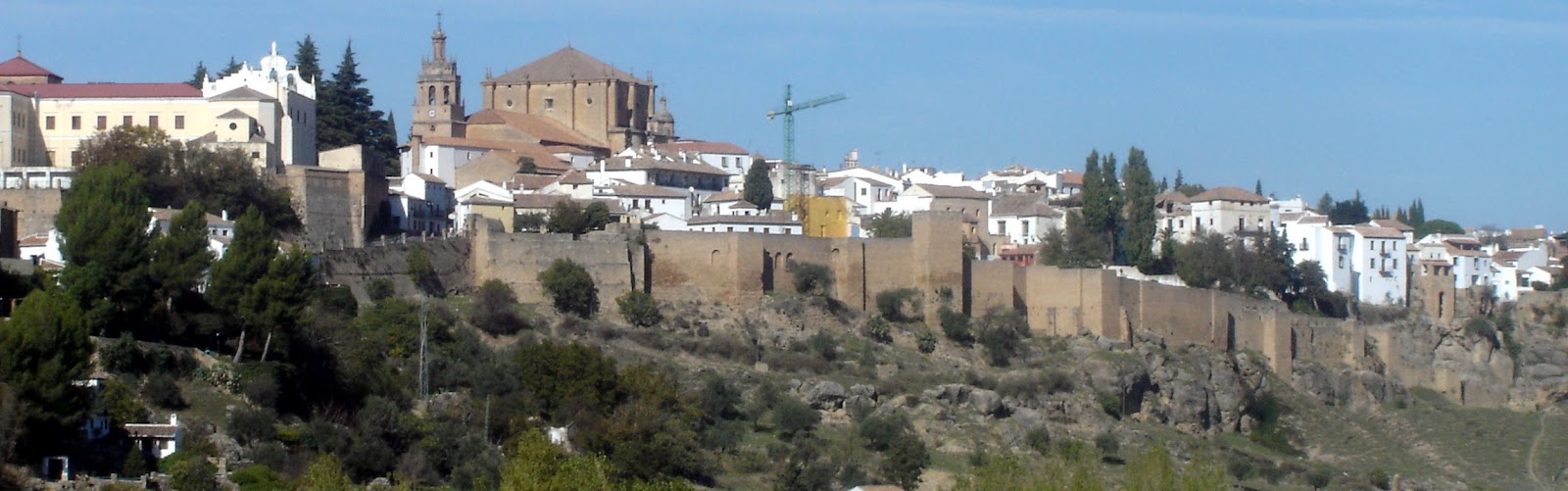
Ronda panorama © Robert Bovington
Robert Bovington 
Roquetas de Mar

more blogs by Robert Bovington...


"Photographs of Spain"
"postcards from Spain"
"you couldn't make it up!"
"a grumpy old man in Spain"
"bits and bobs"
"Spanish Expressions"
"Spanish Art"
"Books About Spain"


www.tablondeanuncios.com